
E-Bikes
May 22, 2026
You have probably seen the local kids in your neighborhood zoom around on their e-bikes on the streets, sometimes dangerously close to your car. Maybe you have seen regular people riding around, going to and from work, on the streets of the city. Either way, it’s hard not to recognize the growing popularity of these new electric modes of transport. E-bikes have exploded in popularity as a convenient way to get around without tying yourself to gas prices and DMV regulations. Popular retailers such as Costco and Walmart have started to list e-bikes online and in-store, meaning that anyone with a credit card can easily acquire a motorized vehicle capable of reaching speeds as fast as 40 miles per hour. Meanwhile, states have not implemented requirements for licensure to operate said vehicles as they have with similar devices like mopeds and zero-emission motorcycles.
What’s an E-bike?
E-bikes, short for electric bicycles, are bicycles that are equipped with a motor and battery that may assist the rider through motorizing the pedals or a throttle, which functions like a gas pedal in a car.
According to the California DMV, e-bikes are classified under three categories:
“Class 1 electric bicycle is equipped with a motor that provides assistance only when the rider is pedaling, and that ceases to provide assistance when the bicycle reaches a speed of 20 miles per hour.
Class 2 electric bicycle is equipped with a motor that may be used exclusively to propel the bicycle, and that is not capable of providing assistance when the bicycle reaches a speed of 20 miles per hour.
Class 3 electric bicycle is equipped with a motor that provides assistance only when the rider is pedaling, and that ceases to provide assistance when the bicycle reaches a speed of 28 miles per hour. This bicycle is equipped with a speedometer.”
E-bikes can navigate public roads just like any other bicycle, which are barred from using the sidewalks unless there is no bike lane present. However, the rules for use of e-bikes outside of public roads can start to differ. Some areas, such as national parks, local trails and other non-public roads, do not permit the use of e-bikes, depending on the class. In national parks, some trails may allow class 1 and/or 2 e-bikes, but class 3 is not permitted. Justifications for these rules include e-bikes being an environmental hazard, safety concerns for fellow riders and hikers, and being potential sources of damage to the trail system.
So what?
If the most common use of e-bikes is for street use, it seems like it should be easy to enforce laws and regulations, regardless of their class, right? If many people find gangs of youth riding their e-bikes around the streets to be a nuisance, why can’t law enforcement do anything about it? As the popularity grows for the use of e-bikes, local law enforcement has needed to crack down on proper use and safety on public roads. Unlike automobiles, which are subject to extensive safety, emissions, and licensing regulations that can limit which vehicle models are sold in each country, e-bikes are produced and sold by a wide range of brands and manufacturers from many different countries with little regulatory oversight. Although this year, Amazon and UL (a global independent safety science company) have filed a lawsuit against a major Chinese bike manufacturer for falsely representing UL’s certification. This lawsuit points in the right direction, but governments are woefully unequipped to deal with the consequences of other smaller manufacturers imitating certifications or classifications online to produce dangerous e-bikes that stand outside any legal classifications.
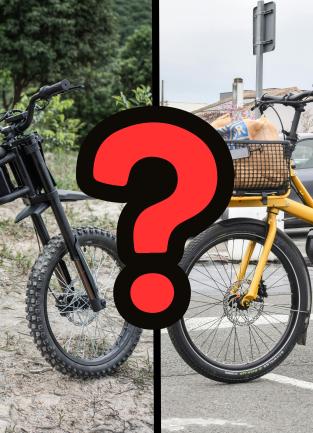
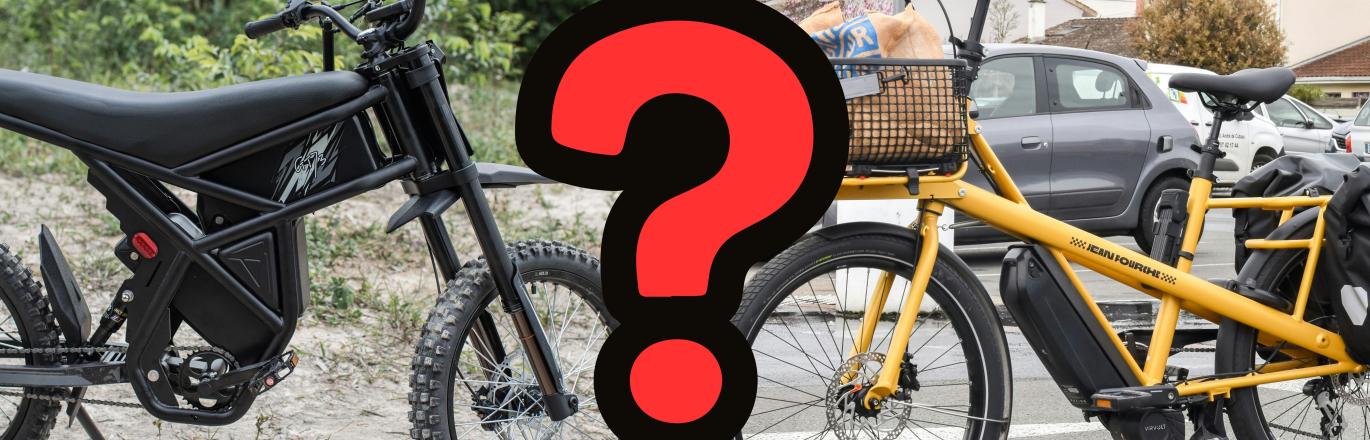
The grey area for the parameters of an electric assisted bike and a zero-emission motorcycle make it difficult for an officer to identify whether the bike requires it to be registered with the Department of Motor Vehicles (DMV), as zero-emission motorcycles can roughly count under the same restrictions as gas powered motorcycles. Zero-emission motorcycles are like traditional motorcycles in the sense of the same speed capabilities on roads, with the main difference being electrically powered compared to internal combustion in motorcycles. Like e-bikes, zero-emission motorcycles can be purchased online and without any paperwork unlike a motorcycle where additional paperwork may be required. An e-bike could be seen as a zero-emission motorcycle from the perspective of a law enforcement officer if they believed it was going or has the same potential of speed as a motorcycle would. And if the officer deemed the e-bike as something that needed registration, it could be impounded and towed away. Wrongfully impounding bikes can lead to complications with the owners along with wasted time.
Recently, viral videos of e-bike owners having encounters with law enforcement, most of the time showcasing a lack of knowledge of the rules and laws for operating their bike on public roads. For example, one may think, “if it has pedals, then it is road legal.” Although close to what the DMV calls for, this line of reasoning is not a surefire way to know whether you can operate the bike on public roads. The main specifications for class 3, the most powerful class of street legal e-bike that requires no registration, are the functions of being pedal-assisted and the motor stopping assistance at 28 miles per hour. Simply having the feature of a pedal does not guarantee that it abides by those rules, as it is possible for an e-bike to have pedals and exceed 28 miles per hour with electronic assistance, making it illegal to operate on the road. Yet, e-bikes like this are being produced and sold directly to consumers online. Both consumers and police officers are left with a legal ambiguity about addressing these cases.
Due to this form of transportation being so new, the standardization and fine tuning of labeling have not been ironed out as well as motorized vehicles running on fuel. Class 3 bikes require the rider to be over the age of 16 when driven on public roads. Combined with the requirement of the bike to stop providing assistance past 28 miles per hour, it brings up the idea of proper labeling. If the packaging states that it abides by the classifications, but the actual power of the bike exceeds the legal limit, what safety implications could entail with youth getting a hold of a bike that is more powerful than the parent(s) who bought it intended? Would a bike that surpasses the legal speed assistance limit for class 3 be required to register under a zero-emission motorcycle or moped?
Realistically, it would be nearly impossible to address all these problems at once. Ideally, laws should include a better classification system of e-bikes. For example, they could differentiate between e-bike systems that are pedal assisted, pedal assisted with throttle, and throttle only. To even branch away from the term e-bike, the surrounding classifications with mopeds and zero-emission motorcycles also need to be investigated for some fine tuning. New York’s current solution has been to classify motorcycles and moped requirements by speed capability rather than what power train it uses. Looking over at the United Kingdom’s rules could also be beneficial, where cycling is a much more common occurrence than in the United States.
The steps taken to regulate e-bikes should be welcomed cautiously. Quickly enacting and enforcing new rules may have harmful consequences that were not intended to happen, such as wrongful impounding, arresting, fines and tickets. Many of these new rules are being enacted at the local level, so it is important to be aware of local government amendments and meetings. Even though there might not be many examples to take from other states for a rough guideline of e-bike regulation and enforcement, ideas should be combined or collaborated to ultimately form a better idea of what society wants to achieve with this new era of transport.
By Dean Se, Library Assistant
Works Cited:
Elliot Wiley, Pedal into the Future, 22 Sustainable Dev. L. & Pol'y 20 (2022)
https://www.massbike.org/ebikes
https://www.cityofrc.us/ebikeinfo
https://leginfo.legislature.ca.gov/faces/billTextClient.xhtml?bill_id=202320240SB1271
https://www.calbike.org/california-e-bike-classifications/
Amazon says Chinese e-bike makers are misusing certification trademarks, 2026 WL 215624