RCLL at SCALL: Learning About Tribal and Federal Indian Law
March 6, 2026
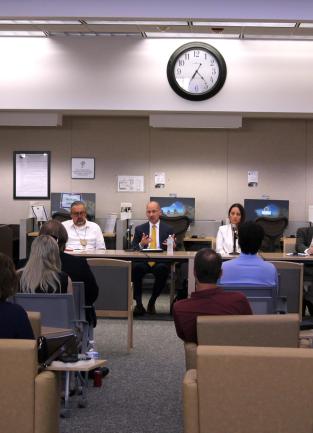
The Southern California Association of Law Libraries held its conference in Palm Springs on the topic, “Tribal and Federal Indian Law: Practice and Policy” and a few of us from the Riverside County Law Library were excited to attend. RCLL is working to expand our Native American legal resource collection and build a relationship with the newly opened Agua Caliente Tribal Court in Palm Springs. Currently, we have a few books including Cohen’s Handbook of Federal Indian Law and our Westlaw subscription provides access to some Native American materials including three treatises on the topic. During the conference, we learned that tribes in Riverside County have played a pivotal role in shaping national laws involving water rights, taxation, and gaming. Most of the presentations were offered by experts who are themselves enrolled Tribal members.
Strengthening our connection to the local Native American community is important to our law library given that, according to the Riverside County Sheriff’s Department, Riverside County is home to 12 Federally Recognized Tribes and nearly 44,000 people identifying as Native American. We also have two Indian high schools and a community college. Many local lawyers may find themselves in Tribal Court litigating issues of taxation, employment, family, or environmental law.
Two presentations dealt specifically with researching and citing Indian law. We were first introduced to the National Indian Law Library started by a non-profit legal access foundation, the Native American Rights Fund, and supported by donations. It has three locations and a consistently updated website accessible to the public. When granted permission by the individual tribes, they publish cases, treaties, and laws.
Another presentation explained that until this year there was no standard way to cite Tribal cases or authorities in the Bluebook. Thanks to grass roots efforts from attorney tribal members, The Bluebook has added Rule 22 establishing a correct method.
These presentations provided an excellent primer on Indian legal issues. We learned that Federal Indian Law is the relationship of tribes to one another and to the federal government while tribal law was created by individual tribes and affects only those tribes’ members and its land.
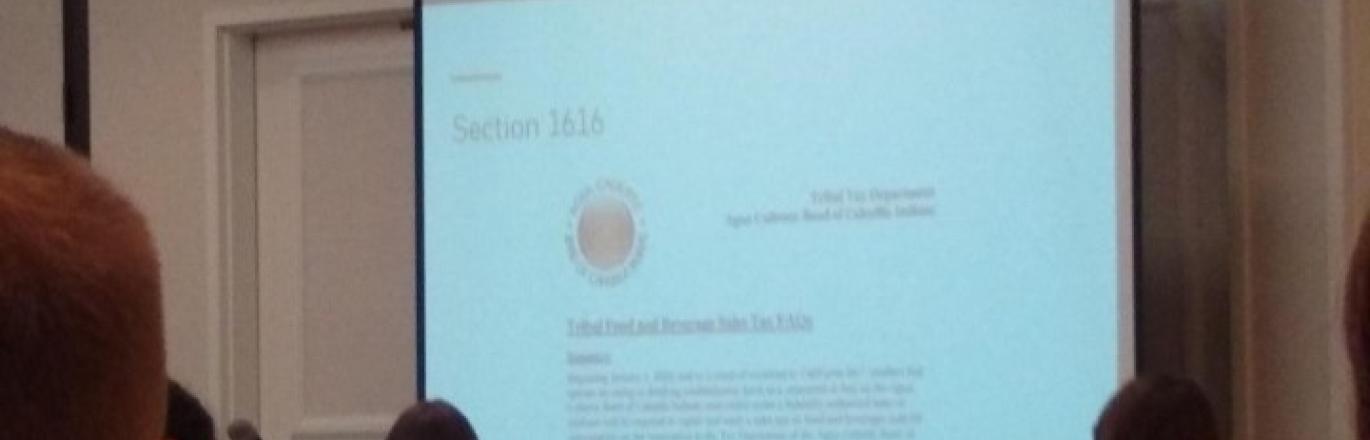
We were interested to learn that landmark cases originating from Riverside County tribes had a profound impact on national laws. For example, the Agua Caliente reservation runs through parts of downtown Palm Springs. The Agua Caliente were not part of this design, but the result has allowed them to profit from the land and businesses of this tourist destination. A portion of food and beverage taxes, as well as rent for use of the land, are collected by the tribe. The presentation given by Lauren van Schilfgaarde, a professor at UCLA Law School, explained that the power to tax is a key to sovereignty. One of the main purposes of the newly opened tribal court is to adjudicate civil and taxation cases arising from this unique situation.
Two other memorable presentations dealt with protection of the environment on reservations and with the history and future of Indian gaming. National legal precedents in both fields were set due to cases originated by Riverside County tribes. The US has Indian gaming casinos because of a case challenging a bingo hall in Cabazon in 1983. CA v. Cabazon Band of Mission Indians cemented tribal sovereignty and their right to offer gambling. Another case started in Riverside County, Agua Caliente Band of Cahuilla Indians v. Coachella Valley Water District, established that tribes have rights to groundwater on their reservation and can object to its over-pumping.
This conference was a wonderful opportunity to increase our understanding of Indian Law, and the unique place Native Americans have in setting legal precedents in many areas. At RCLL, we look forward to deepening our understanding of this unique legal field and providing as many resources as possible to the local community.
By Laura Whyte, Lead Library Assistant, and Sherri Gagliardi, Library Assistant